

PHENOLIC RESIN
Phenolic resin is a synthetic polymer obtained by the reaction of phenol (an aromatic alcohol) with formaldehyde. It’s one of the oldest synthetic resins, known for its thermal stability, chemical resistance, and mechanical strength.
Phenolic resins, also known as phenol–formaldehyde resins (PF resins), are a class of synthetic thermosetting polymers obtained by the condensation reaction of phenol (C₆H₅OH) with formaldehyde (CH₂O). They were the first completely synthetic commercial polymers, introduced in 1907 under the trade name Bakelite.
Chemical Properties:
Chemical family: Thermosetting polymers
Main components: Phenol (C₆H₅OH) + Formaldehyde (CH₂O)
Types:
Novolac (acid-catalyzed, needs a hardener to cure)
Resole (base-catalyzed, self-curing)
Appearance: Amber to dark brown solid or liquid, depending on formulation
Key Applications:
Phenolic resins are widely used in industries due to their durability, thermal resistance, and insulating properties. Key applications include:
- Adhesives & Binders
- Wood adhesives (plywood, laminates, particle boards).
- Foundry resins (sand molds & cores).
- Abrasive products (grinding wheels, friction materials).
- Molding Compounds & Composites
- Electrical components, kitchenware handles, knobs.
- Automotive brake pads, clutches, and friction materials.
- Coatings & Laminates
- Protective coatings, varnishes, and industrial paints.
- Decorative laminates (high-pressure laminates, countertops).
- Insulation Materials
- Electrical insulation boards.
- Thermal insulation foams.
- Other Specialized Uses
- Flame-retardant materials.
- Carbon–carbon composites (precursor for carbon materials).
- Refractory binders in metallurgy
Key Features:
- Thermal Stability: Withstands high temperatures.
- Mechanical Strength: Excellent dimensional stability, hardness, and compressive strength.
- Chemical Resistance: Resistant to acids, water, and many solvents (but not strong alkalis).
- Electrical Insulation: Good dielectric strength and low electrical conductivity.
- Flame Resistance: Inherently flame-retardant, produces char instead of dripping when burned.
- Adhesion: Strong bonding ability to various substrates.
Products list:
1. Dioctyl Terephthalate (DOTP) TDS: information such as product composition, physical and chemical properties, usage guidelines, storage recommendations, and any other relevant technical details,
COA: We provide Actual test results conducted on a specific batch of the product.Purity: 99.5+% etc. …..
MSDS: MSDS is provided for the related product.
DOTP:
Formula : C24H38O4
Molecular weight : 390.56 g/mol
CAS-No. : 6422-86-2
Structural Formula:
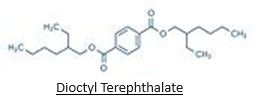
Physical and Chemical properties of DOTP Plasticizer:
DOTP plasticizer is almost colourless low viscosity liquid.
State: Colorless Liquid
The viscosity is 410 MPa.s (at 0°C), 63MPa.s (at 25°C), and 5 MPa.s (at 100°C).
Freezing point: (-) 48℃.
Boiling point: 383- 384℃.
Flash Point: ~210-212℃.-Closed cup.
Ignition point: 399℃.
Density: 0.986 g/cm3 at 25 °C
Water solubility: 0.0004 g/l at 22.5 °C – insoluble
Color Hazen: 0 to < 20
APPLICATIONS
CABLE INDUSTRY
PVC INDUSTRY
KIDS PLASTIC TOYS
MEDICAL PLASTIC
TECHNOLOGY
95%
The process reaction is carried out via esterification technology of 2-ethylhexanol with terephthalic acid (PTA) and producing 95% DOTP purity.
99%
The Thin Film Purification Technology utilized for DOTP purification and enhancement up to 99.99 % purity.